FINTECH
2026
AI-native platform for private markets, turning complex documents and messy data into investor-ready decisions.
Transformed investment workflows for HNW, Family Offices.
I joined Argus in February 2026 to lead the 0→1 design of a private-markets platform. The surfaces an investor uses to evaluate a deal, read their portfolio, and prove they are ready to move on it.
The platform reads complex documents, structures messy data, and turns it into insight through modelling and simulation. My work was deciding what that intelligence looks like when an investor has ten seconds to judge it.
Key Focus Areas and Team Squad
Research, Interaction Design, Visual Design, Usability Testing, and Prototyping (Design‑to‑Code)
RIAs, Family Offices, Firm admins, Advisors serving assigned households, and HNW clients
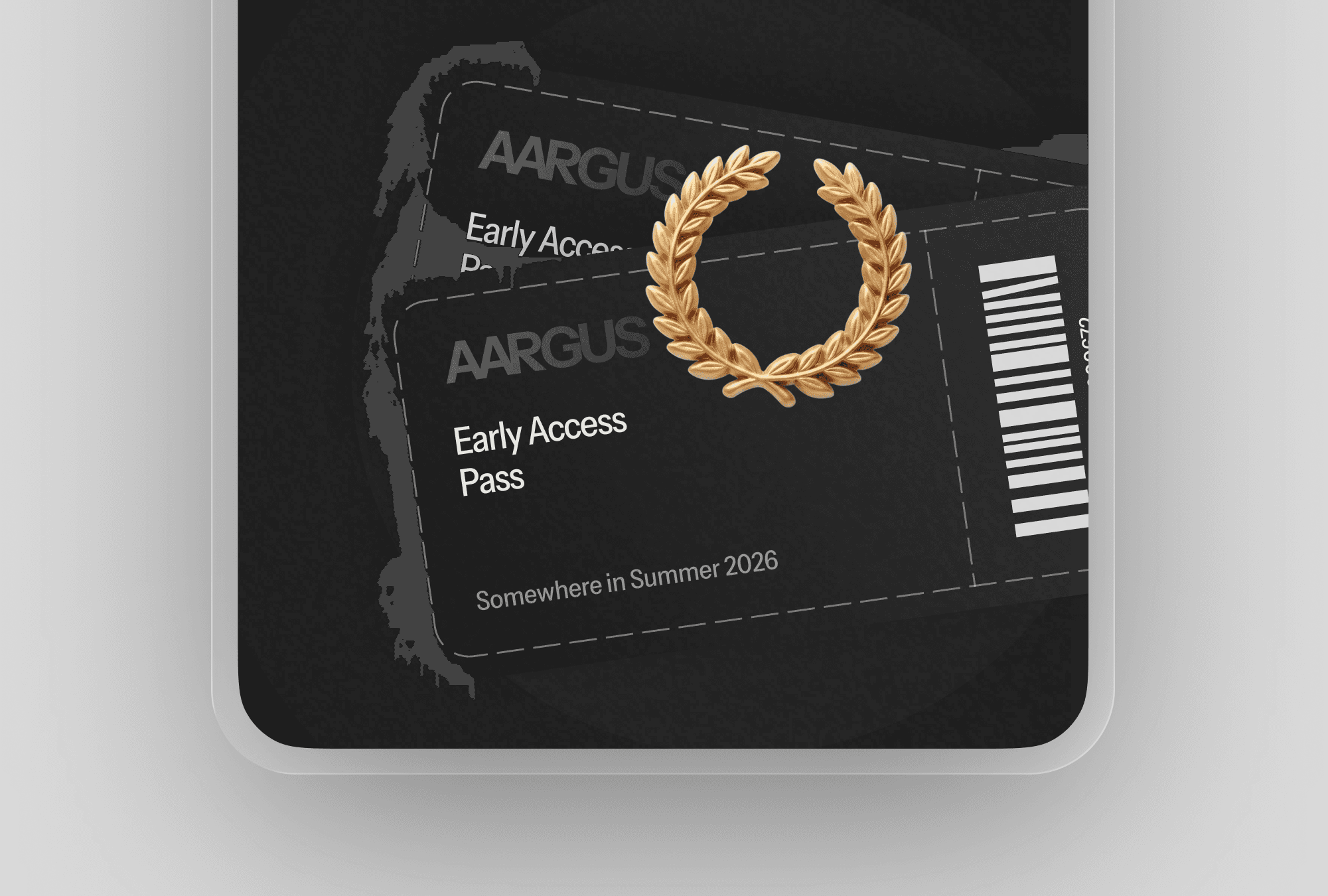
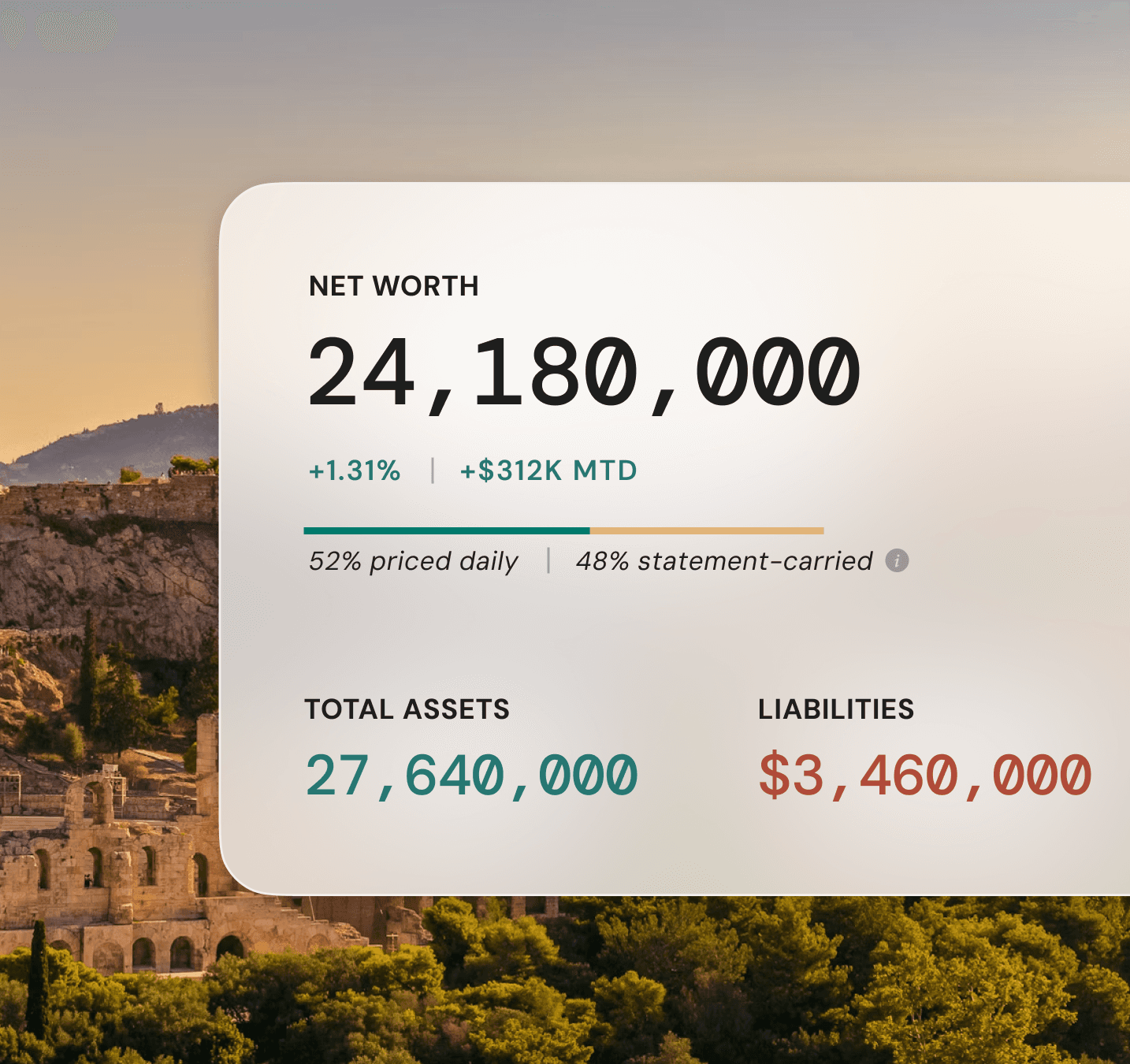


“Nobody’s money sits in one place.”
Capital accounts, subscription agreements, K-1s, statements from a dozen institutions. None of it structured, none of it current, all of it standing between an investor and a decision.
Before anyone can move on a deal they have to prove where they stand, and that picture gets assembled by hand. It’s stale the moment it’s shared. The assembling is why good opportunities get answered late.
Argus began as a 0→1 bet: if machine learning could automatically read, structure, and model these documents, investors could stop gathering data and start judging it.
When I was onboarded, Argus existed purely as a bare GitHub repository and a collection of complex ML simulations. My mandate was to transform this highly sophisticated, technical codebase into an intuitive, market-ready platform across three primary surfaces:
Deal evaluation
Where an opportunity gets taken apart. The design problem was density. Private-market deals carry more variables than a screen can hold, so the work was deciding what an investor needs in the first ten seconds versus what belongs one level down.
Portfolio diagnostics
Modelling and simulation made legible. Not a dashboard of everything, but a read on what has changed, what it means and what to do about it. That’s the difference between reporting and intelligence.
Capital readiness
The personal financial statement, rebuilt so it maintains itself. Plaid syncs what it can reach. Private holdings, real estate and alternatives keep a manual path and a document-upload path that don’t feel second class.
Low-Budget Research vs. Industry Myths
Argus was bootstrapped, so extensive field research wasn’t an option. I had to find a way to understand the market without waiting for a traditional research budget.
I went where investors were already talking. I scraped public financial forums and communities to uncover unfiltered complaints about legacy systems, recurring workflow gaps, and the friction investors were dealing with firsthand.
I applied the same approach internally. Instead of spending weeks ramping up on an unfamiliar codebase, I used an AI assistant to interrogate it and generate an interactive onboarding.md framework. It gave me a working map of Argus’s technical capabilities, constraints, and existing foundations before I started designing.
Competitive Disadvantage
The financial tools sector is heavily regulated and risk-averse. Legacy institutions are slow to change, which makes it difficult to experiment with new interface patterns or take meaningful risks with how financial information is presented.
Argus had a different advantage. As a small, agile startup, we could move quickly, test ideas in the product, and push a more modern visual language without the layers of approval that slow down established institutions.
Pull requests, not handoff files
Working in Claude Code and Cursor, the output of design wasn’t a handoff file. It was implementation-ready UI, pixel-accurate, in the codebase, opened as pull requests.
That collapsed the distance between deciding something and it being live, and took roughly a third off our go-to-market time.

Design to Code with Consistency
I changed the workflow from design-to-code to component-first: audit the Figma design, validate each element to an existing token and component, then implement using the existing system.
New components only entered the picture when nothing suitable existed.
The shift was simple: Figma defines what the interface should look like. The design system defines how it should be built.


Argus went from nothing to a platform with signed design partners. The surfaces I owned are the ones those partnerships were sold on.
The 0→1 launch supported a
Investor task completion improved by
AI-native design workflows accelerated go-to-market by


Made with Love, Peer pressure & Framer ❤